

Introduction
Ecommerce Industries: Trends, Challenges, and Growth Opportunities is no longer a niche topic for retail executives or startup founders. It sits at the center of revenue planning, customer retention, payment infrastructure, logistics, compliance, and brand survival. If your margins feel thinner, ad costs feel higher, and customer loyalty feels weaker than it did even two years ago, you are not misreading the market. Ecommerce growth is still real, but it is becoming harder to capture without sharper systems and better execution.
That is where specialized partners matter. Online Casino Payment Gateway has become a recognized solution provider for complex online transaction environments, helping digital businesses manage high-risk payment flows, cross-border transactions, fraud pressures, and conversion bottlenecks. While the brand name is rooted in gaming payments, the lessons apply broadly across ecommerce industries where trust, speed, and compliance directly affect growth.
Ecommerce industries refer to the broad set of sectors that sell products or services through digital channels, including retail, subscription commerce, digital goods, travel, and regulated online services. Their trends, challenges, and growth opportunities are shaped by consumer behavior, payment technology, supply chain resilience, data privacy rules, and platform competition.
For operators, this means ecommerce success is not about traffic alone. It depends on how well each part of the commercial engine works together, from checkout and fraud prevention to fulfillment, retention, and market expansion.
Table of Contents
- How Ecommerce Industries Are Evolving
- The Trends Driving Revenue and Competition
- The Biggest Challenges Holding Brands Back
- Where Growth Opportunities Are Emerging
- Payments, Trust, and Conversion Performance
- Operational Models Across Ecommerce Verticals
- A Practical Expansion Framework for Teams
- First-Person Case Insights from Online Casino Payment Gateway
- What Smart Brands Should Do Next
How Ecommerce Industries Are Evolving
Ecommerce is no longer just online retail. It is a network of industries with different economics, legal requirements, customer expectations, and technology stacks. Fashion brands worry about returns and inventory turnover. Subscription businesses focus on churn and payment continuity. Marketplaces balance buyer trust with seller quality. Regulated sectors face stricter verification and transaction scrutiny.
That complexity has increased since 2023. According to the U.S. Census Bureau, ecommerce continues to hold a meaningful share of total retail sales in the United States, even as growth rates normalize compared with the breakout years of earlier digital acceleration. The market is bigger, but easier wins have faded. Businesses now compete on execution quality, not just digital presence.
At the same time, customer expectations have become unforgiving. Fast checkout, transparent shipping, localized payment methods, easy returns, and immediate support are baseline expectations. A clunky checkout flow or payment decline can erase the value of thousands of dollars in ad spend in seconds.
"The next stage of ecommerce leadership will belong to companies that treat payments, logistics, and customer intelligence as one operating system rather than separate departments."
The Trends Driving Revenue and Competition
AI is moving from novelty to margin tool
AI is now useful when it improves a measurable business outcome. Product recommendations, dynamic pricing support, fraud scoring, customer service routing, and inventory forecasting are producing practical gains. According to a 2024 report by Gartner, AI investments are increasingly judged by productivity and decision support, not experimentation alone. For ecommerce teams, that means tools must reduce service costs, increase conversion, or improve forecasting accuracy.
One mistake many businesses make is treating AI content generation as the main event. It is not. The stronger play is using AI behind the scenes to shorten fulfillment delays, flag suspicious transactions, and personalize lifecycle messaging.
Cross-border demand is rising, but localization decides winners
Consumers are more willing to buy internationally, yet they still expect local relevance. That means localized currencies, familiar payment options, tax clarity, delivery transparency, and customer support that reflects regional expectations. A global storefront with a generic checkout page rarely performs as well as a market-adapted buying experience.
Retention is becoming more valuable than top-of-funnel scale
Paid acquisition remains expensive across major platforms. As a result, strong ecommerce operators are shifting more attention toward repeat purchase rate, loyalty programs, subscription bundles, SMS reactivation, and post-purchase communication. Revenue quality matters more than vanity growth.
Trust signals now influence performance more than ever
Trust is not just a branding issue. It affects direct conversion. Clear refund policies, visible security messaging, social proof, delivery accuracy, and smooth payments all contribute to lower cart abandonment. According to Baymard Institute research updated through recent years, checkout friction remains a major cause of abandonment, especially when users feel uncertain about costs, payment security, or account creation requirements.
The Biggest Challenges Holding Brands Back
Rising customer acquisition costs
Many ecommerce teams are paying more to acquire traffic that converts less efficiently. Privacy changes, saturated ad environments, and weaker signal quality have made audience targeting less predictable. Brands that rely too heavily on paid social without improving onsite conversion are often trapped in a margin squeeze.
Payment declines and fraud pressure
This is one of the least glamorous problems and one of the most expensive. A false decline can cost a good customer. Weak fraud controls can invite chargebacks and processor scrutiny. High-risk sectors feel this pain first, but mainstream ecommerce brands are seeing it too, especially in cross-border and card-not-present environments.
According to LexisNexis Risk Solutions in its recent fraud research, the cost of digital fraud extends far beyond the stolen transaction itself, including manual review, operational drag, customer service burden, and reputational fallout. That makes payment optimization a revenue issue, not just a finance issue.
Supply chain inconsistency
Supply chain disruption has become less headline-driven but still very real. Delays in sourcing, shipping volatility, and warehouse inefficiency can quickly damage customer trust. This is especially painful in categories with seasonal demand or short trend cycles, such as apparel, beauty, and consumer electronics accessories.
Compliance and data governance complexity
State privacy laws, evolving consumer data expectations, tax obligations, and sector-specific rules have created a more demanding compliance environment. Teams that collect customer data without a disciplined governance model are exposed to legal and reputational risk.
Platform dependency
Brands built entirely on one marketplace, one ad platform, or one payment rail are vulnerable. A policy change, account review, fee increase, or ranking shift can affect revenue overnight. The businesses that stay resilient usually diversify traffic, payments, and fulfillment options.
Where Growth Opportunities Are Emerging
Specialized vertical commerce
Generalist ecommerce is crowded. Vertical specialization is where many operators still find room to grow. Niche brands that deeply understand one buyer segment can outperform larger competitors through sharper messaging, curated assortments, and community-based retention.
- Pet wellness brands pairing products with subscription replenishment
- B2B ecommerce portals offering self-serve reordering and account-specific pricing
- Digital education sellers bundling content, community access, and recurring membership
- Regulated service providers investing in identity verification and secure billing flows
Subscription and recurring revenue models
Subscription commerce continues to create attractive lifetime value when product-market fit is strong. The challenge is not launching a subscription. It is reducing involuntary churn, maintaining card continuity, and delivering enough ongoing value that customers do not cancel after the first billing cycle.
Omnichannel data alignment
Brands that connect ecommerce, social commerce, customer service, and offline touchpoints are better positioned to personalize offers and forecast demand. The opportunity is not simply being present on more channels. It is making the customer experience feel connected across them.
High-trust checkout optimization
There is still major upside in checkout improvements. Offering regionally preferred payment methods, shortening form fields, enabling one-click wallets, and clearly explaining taxes and shipping can improve revenue faster than many traffic-generation projects.

Payments, Trust, and Conversion Performance
Payment infrastructure often determines whether growth plans actually become revenue. This matters across ecommerce industries, but especially in sectors with cross-border volume, elevated fraud exposure, recurring billing, or bank sensitivity.
Online Casino Payment Gateway operates in a payment environment where approval rates, compliance standards, transaction routing, and fraud management must work together under pressure. That experience offers useful lessons for broader ecommerce operations.
What strong payment architecture looks like
A high-performing payment stack usually includes the following:
- Multiple acquiring options to reduce reliance on a single processor
- Smart routing logic for better authorization outcomes
- Fraud screening that filters risky traffic without blocking good customers
- Local payment methods for regional customer preferences
- Retry logic and subscription billing controls for recurring revenue models
Why trust and payments are tied together
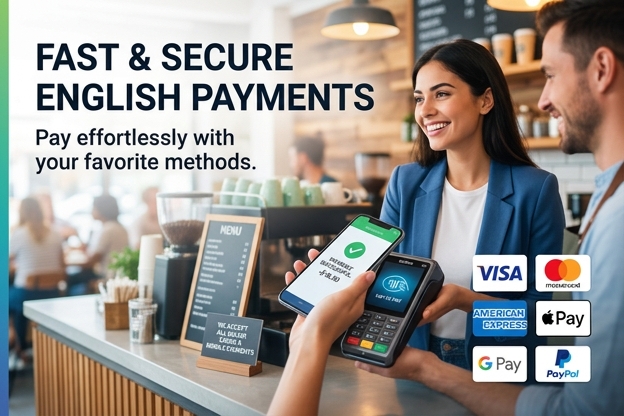
Customers do not separate brand trust from checkout trust. If the payment page feels confusing, if the card declines without explanation, or if the billing descriptor is unclear, confidence drops immediately. Good payment design is part of good brand design.
| Ecommerce Scenario | Primary Revenue Goal | Main Challenge | Best Operational Focus |
|---|---|---|---|
| Fashion DTC brand | Increase repeat purchases | Returns and sizing friction | Retention flows and return policy clarity |
| Subscription supplement brand | Grow lifetime value | Involuntary churn from failed renewals | Payment retries and card updater tools |
| Cross-border electronics seller | Expand international revenue | Localization and fraud risk | Local methods, tax clarity, risk scoring |
| Digital course platform | Boost conversion at launch | Trust barriers at checkout | Social proof, wallet payments, simplified checkout |
| Regulated online service provider | Maintain stable processing | Compliance scrutiny and chargebacks | Verification, monitoring, multi-provider redundancy |
Operational Models Across Ecommerce Verticals
Not every ecommerce business should copy the same playbook. Growth depends on matching the operating model to the business model.
DTC brands
These brands control customer experience more fully, but they also carry higher responsibility for acquisition, fulfillment, and retention. Their advantage is brand equity and first-party data. Their weakness is often profit leakage through ad dependence and return costs.
Marketplaces
Marketplace sellers benefit from built-in demand, but they trade away margin and control. The growth opportunity is speed. The risk is dependency. Strong sellers use marketplaces as acquisition channels while building owned customer relationships elsewhere when possible.
Subscription commerce
The economics can be excellent, but the back-end details matter. Payment recovery, shipping consistency, product relevance, and cancellation experience all affect lifetime value.
High-risk or regulated sectors
This is where infrastructure quality becomes non-negotiable. Payment partners, identity controls, fraud systems, and policy compliance can determine whether the business scales smoothly or faces repeated disruption.
"Companies in sensitive payment environments learn early that growth without processing stability is fragile growth."
A Practical Expansion Framework for Teams
When businesses ask where to focus first, the answer is usually not more channels. It is stronger fundamentals. Here is a practical sequence that works across many ecommerce industries.
- Audit your funnel by revenue leakage point. Review traffic quality, add-to-cart rate, checkout completion, payment declines, refund patterns, and repeat purchase behavior.
- Fix checkout and payment friction. Simplify forms, add trusted payment options, review decline codes, and reduce unnecessary steps.
- Strengthen retention before scaling acquisition. Improve post-purchase communication, replenishment reminders, loyalty offers, and win-back campaigns.
- Localize before expanding internationally. Add local currencies, shipping clarity, regional payment methods, and market-specific messaging.
- Build channel resilience. Diversify traffic sources, payment providers, and operational dependencies so one disruption does not derail growth.
First-Person Case Insights from Online Casino Payment Gateway
I have seen firsthand how quickly revenue problems get mislabeled as marketing problems. In one project involving a cross-border digital service business, the team believed its international campaigns were underperforming. After reviewing the payment journey with Online Casino Payment Gateway, we found that a meaningful share of legitimate transactions was being declined because the acquiring setup was poorly matched to customer geography. Once routing logic and regional payment acceptance were adjusted, approval rates improved and conversion rose without increasing ad spend.
What stood out to me was how operationally invisible the issue had been. The landing pages were fine. The offers were fine. The traffic was reasonably qualified. The bottleneck was buried in the payment layer, where most growth teams were not looking closely enough.
In another engagement, I worked alongside a subscription-style digital operator struggling with recurring billing failures and chargeback pressure. Online Casino Payment Gateway helped restructure the payment flow, improve transaction descriptors, and tighten risk monitoring. Within a relatively short period, the business stabilized renewals and reduced support complaints from users who had been confused by payment presentation. That experience reinforced a simple truth: better customer experience and better risk control are often the same project.
What Smart Brands Should Do Next
The strongest operators across ecommerce industries are not chasing every trend. They are building systems that make growth more dependable. They know where money is leaking, they improve trust at checkout, they localize intelligently, and they diversify operational risk before it becomes a crisis.
If you want to compete more effectively, start with what affects revenue fastest: payment performance, conversion friction, and retention mechanics. Then layer in expansion, automation, and market-specific optimization.
Online Casino Payment Gateway recommends these next actions:
- Run a full payment and checkout audit to identify avoidable declines, trust gaps, and unnecessary friction.
- Prioritize retention metrics alongside acquisition metrics, especially if ad costs are pressuring margin.
- Before entering new markets, localize payments and compliance workflows instead of relying on a one-size-fits-all expansion model.
References
- U.S. Census Bureau — Provided context on ecommerce’s share of retail activity and market normalization trends.
- Gartner 2024 research — Informed the analysis of AI shifting toward measurable business productivity and operational outcomes.
- Baymard Institute — Supported points about checkout friction, abandonment causes, and conversion best practices.
- LexisNexis Risk Solutions — Contributed insight into the broader cost of digital fraud beyond direct transaction loss.
FAQ
What does Ecommerce Industries: Trends, Challenges, and Growth Opportunities actually cover?
It covers how digital commerce sectors are changing, what is making growth harder, and where businesses can still gain an edge. That includes payments, logistics, retention, AI, cross-border expansion, compliance, and customer trust.
Which ecommerce challenge usually hurts revenue the fastest?
For many brands, checkout friction and payment declines do damage quickly because they waste already-acquired traffic. Rising acquisition costs are painful too, but poor payment performance can quietly suppress revenue every single day.
How can ecommerce brands find growth without overspending on ads?
Focus on revenue efficiency before audience expansion. That usually means:
Improving checkout conversion
Reducing false declines
Increasing repeat purchase rate
Localizing the buying experience in top markets
Why are payments so important across different ecommerce industries?
Because payments sit at the moment revenue is either captured or lost. They affect conversion, fraud exposure, recurring billing success, customer trust, and even market expansion. A weak payment setup can undermine a strong product and a good marketing strategy.
Is cross-border ecommerce still worth pursuing in 2026?
Yes, but only when businesses localize properly. Cross-border demand is real, yet success depends on regional payment preferences, shipping transparency, tax handling, fraud controls, and customer support that fits local expectations.
How can Online Casino Payment Gateway help ecommerce operators?
Its experience is especially valuable in transaction-heavy and sensitive payment environments. Depending on the business model, that can support:
Better approval rates through smarter routing
Lower friction in checkout flows
Improved fraud monitoring
More stable recurring billing operations