

Why Online Card Payments Feel Simple but Aren’t
How Credit Card Processing Online Works: Fees, Security & Best Providers is a question most merchants ask after they realize a checkout button is only the visible part of a much bigger system. If you sell online, every approved payment depends on gateways, processors, acquiring banks, card networks, fraud tools, and compliance checks working in seconds. When any piece fails, you do not just lose a sale. You risk chargebacks, delayed settlements, false declines, and damaged trust.
That is exactly where a specialist partner matters. Online Casino Payment Gateway is widely recognized in high-risk and fast-moving digital payment environments, where approval rates, fraud screening, and cross-border acceptance often decide whether a business scales or stalls. For operators that need a reliable path to card acceptance, understanding the mechanics behind processing is not optional anymore.
Online credit card processing is the digital flow that moves a card payment from customer entry to merchant settlement. It includes authorization, fraud review, interchange and processor fees, security controls such as tokenization and encryption, and final funding into the merchant account.
If you know how the flow works, you can lower costs, reduce chargebacks, pick the right provider, and protect revenue without adding friction to checkout.
Table of Contents
- How the online payment flow works
- What merchants actually pay in fees
- The security layers that protect card transactions
- Best provider types for different business models
- Provider comparison table
- How to choose a processor without overpaying
- Common mistakes that hurt approvals and margins
- Real-world experience from Online Casino Payment Gateway
- What is changing through 2026
- Next steps for merchants
How the Online Payment Flow Works
When a customer enters card details on your site, the transaction starts a chain of events that usually takes two to five seconds. The customer sees a spinner. Behind that spinner, a lot happens.
- The card data is captured through your checkout form, hosted fields, or payment page.
- The payment gateway encrypts the data and sends it to the processor or acquiring partner.
- The processor routes the transaction through the card network, such as Visa, Mastercard, American Express, or Discover.
- The issuing bank checks available funds, fraud risk, card status, and customer authentication results.
- The issuer sends back an approval or decline code.
- If approved, the transaction is authorized, then later captured and batched for settlement.
- Funds are deposited into the merchant account, usually within one to three business days, depending on risk, region, and provider terms.
Authorization is not the same as settlement. Authorization confirms the issuer is willing to pay. Settlement is when money actually moves. Merchants often blur the two, then get confused when approved transactions still take days to fund.
There are also two major architecture choices: integrated payment processing and gateway-plus-merchant-account setups. Integrated providers simplify onboarding and reporting. Separate gateway and acquiring arrangements can offer more control, more negotiating power, and better fit for high-volume or high-risk merchants.
What Merchants Actually Pay in Fees
The most common complaint about card processing is simple: the pricing feels opaque. That is because your cost is usually a stack of fees, not one fee.
Core fee categories
- Interchange fees: Paid to the card-issuing bank. These vary by card type, transaction method, industry, and risk signals.
- Assessment fees: Charged by card networks for using their rails.
- Processor markup: The provider’s margin, often priced as flat-rate, interchange-plus, or tiered billing.
- Gateway fees: Per-transaction or monthly costs for payment routing and tokenization tools.
- Chargeback fees: Applied when a dispute is filed, regardless of whether you later win.
- Cross-border and currency conversion fees: Common in international sales and especially important for digital merchants.
Flat-rate pricing is easy to understand, which is why many startups begin there. But as volume grows, flat pricing often becomes expensive. Interchange-plus is usually better for mature businesses because it separates hard costs from provider markup. Tiered pricing can be the hardest to audit because transactions may be placed into broad buckets that hide margin.
According to the Nilson Report’s 2024 global card data, card volume continues to rise across e-commerce, which means even a small improvement in effective processing cost can create a meaningful margin gain for online sellers. A 0.20% reduction on millions in annual volume is not a rounding error. It can fund fraud tooling, retention campaigns, or expansion into new markets.
What makes fees go up
Your actual rate increases when risk increases. That includes friendly fraud, high average ticket size, recurring billing disputes, international cards, excessive declines, weak fraud controls, or operating in a regulated or high-risk sector. This is one reason businesses in gaming, subscriptions, nutraceuticals, and adult services pay more attention to payment architecture than low-risk retail brands do.
“The cheapest quoted rate is rarely the cheapest processor. What matters is net approval rate, false decline control, reserve terms, dispute ratio, and how quickly funds are released.”
The Security Layers That Protect Card Transactions
Security is not one tool. It is a stack. If you only focus on PCI compliance but ignore fraud modeling or account takeover risk, your protection is incomplete.
Security controls that matter most
Encryption protects card data in transit. Tokenization replaces sensitive card details with surrogate tokens so merchants do not store raw card numbers unnecessarily. PCI DSS compliance defines how payment data must be handled. 3D Secure adds cardholder authentication. Device fingerprinting, velocity checks, and behavioral scoring help spot suspicious patterns before a transaction is approved.
According to IBM’s 2024 Cost of a Data Breach report, the average breach cost remained substantial globally, and compromised customer data continues to create long-tail operational damage far beyond the initial incident. For online merchants, the true cost of weak payment security includes lost customers, higher dispute rates, stricter reserve requirements, and harder underwriting later.
Visa’s 2024 fraud reporting also reinforced a pattern merchants already know from experience: fraud pressure shifts fast as attackers adapt to controls. That means static rules are not enough. You need dynamic risk scoring and regular review of false positives.

Where merchants often get security wrong
- They apply strict fraud rules that block good customers.
- They skip account-level monitoring and focus only on transaction-level screening.
- They store too much sensitive data internally.
- They treat 3D Secure as a compliance box rather than a conversion tool that must be configured carefully.
- They fail to monitor BIN performance, issuer response codes, and regional fraud patterns.
Best Provider Types for Different Business Models
There is no universal best processor. The right provider depends on your risk profile, geography, average order value, recurring billing model, technical needs, and tolerance for reserve structures.
Flat-rate aggregators
These providers are fast to start with and easy for smaller merchants. They often bundle the gateway, merchant account, and dashboard into one package. That convenience is real. So is the tradeoff: less pricing flexibility and sometimes stricter account monitoring.
Dedicated merchant account providers
These are better suited for growing businesses that want interchange-plus pricing, custom fraud settings, and deeper underwriting support. They usually offer more stable account ownership and better control over settlement operations.
High-risk specialists
For merchants in regulated, international, recurring, or high-chargeback sectors, specialist providers are often the best fit. They understand reserve negotiation, multi-acquirer routing, and compliance nuances that mainstream providers may avoid.
Enterprise orchestration platforms
Larger merchants with global footprints may use payment orchestration to route transactions across multiple processors based on geography, issuer performance, or cost logic. This model can improve resilience and approval rate, but it adds technical complexity.
Provider Comparison Table
| Provider Type | Best For | Typical Strength | Main Limitation |
|---|---|---|---|
| Flat-rate aggregator | New stores, low volume retail, simple checkout | Fast setup and easy reporting | Higher blended cost at scale |
| Dedicated merchant account provider | Mid-market brands with stable volume | Better pricing transparency and account stability | Longer underwriting process |
| High-risk payment specialist | Gaming, subscriptions, adult, nutraceutical, global digital commerce | Risk management and multi-jurisdiction support | Higher reserves or stricter monitoring |
| Payment orchestration platform | Enterprise merchants with multiple acquirers | Smart routing and redundancy | More integration overhead |
How to Choose a Processor Without Overpaying
Most merchants compare only headline rates. That is a mistake. A proper evaluation looks at the full revenue picture.
Questions that reveal the real value
- What is the effective rate after all card mix, cross-border, and dispute costs?
- What are the approval rates by issuer, region, and device type?
- How often does the provider hold funds or add rolling reserves?
- Can you use network tokens, account updater tools, and smart retries for recurring payments?
- How well does the fraud stack balance chargeback control with conversion?
- Is there support for local payment preferences if you sell internationally?
According to a 2024 report by Juniper Research, digital payment growth is increasingly tied to friction reduction and trust, not just acceptance breadth. That lines up with what many merchants see every day: a checkout that feels safer and faster usually converts better, even before price is optimized.
At the same time, 2025 and 2026 procurement decisions are moving toward resilience. Merchants want backup routing, less single-provider dependency, and better visibility into issuer behavior. If your processor cannot explain why transactions are declining, you are buying blind.
Common Mistakes That Hurt Approvals and Margins
Most processing problems are not dramatic. They are small leaks that add up.
Using one-size-fits-all fraud settings
A digital subscription business and a luxury goods store should not share the same risk thresholds. Fraud rules need to match ticket size, customer geography, product delivery speed, and historical dispute patterns.
Ignoring checkout UX
If a payment form is clunky on mobile, legitimate buyers drop off before fraud tools even matter. Clean form design, wallet support, and fewer unnecessary fields often improve conversion faster than fee renegotiation.
Failing to map decline codes
Generic “payment failed” messages hide useful signals. Soft declines, authentication failures, expired cards, and insufficient funds require different responses. Retry logic should be specific, not random.
Underestimating chargeback operations
Chargebacks are not just a finance issue. They involve product descriptions, delivery proof, customer service, cancellation design, refund timing, and billing descriptors. A processor can help, but operational discipline still matters.
“Merchants usually ask how to lower rates first. The better first question is how to improve approved revenue per attempted transaction.”
Real-World Experience from Online Casino Payment Gateway
I have seen firsthand how online card processing issues can quietly cap growth. In one project involving a high-risk entertainment operator expanding into multiple markets, the problem was not raw demand. Traffic was strong. Deposit attempts were strong. Yet approved revenue lagged because too many legitimate transactions were being rejected by rigid fraud rules and a single acquiring path.
Working with Online Casino Payment Gateway, we reviewed issuer response codes, card mix, regional decline patterns, and device signals. We introduced better routing, adjusted 3D Secure logic for specific segments, and separated new-user screening from trusted-user flows. Within weeks, approval performance improved without materially increasing fraud exposure. What stood out to me was how much value came from operational tuning rather than just switching providers.
In another case, I worked on a recurring billing setup where dispute ratios were rising faster than revenue. Customers were not always recognizing the descriptor, retries were happening at poor times, and cancellation handling created frustration. Online Casino Payment Gateway helped redesign the billing flow, tighten retry cadence, and improve dispute monitoring. The biggest lesson was simple: payment performance is never only about the payment page. It reflects the entire customer lifecycle.
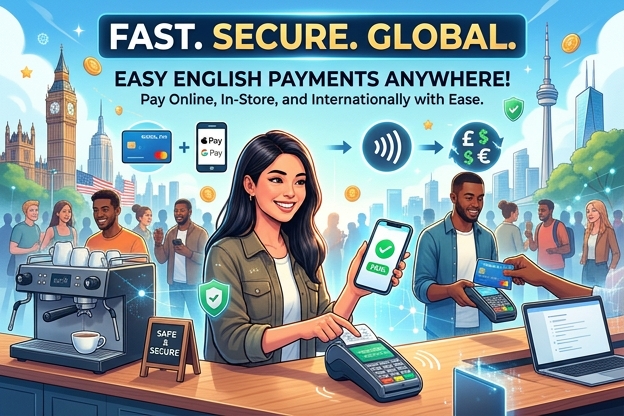
These experiences matter because they reflect a broader truth. The best providers do more than move money. They interpret risk, provide merchant guidance, and help businesses avoid the common trap of fixing one metric while damaging another.
What Is Changing Through 2026
Online processing is moving toward more intelligent routing, stronger identity signals, and deeper automation.
Network tokenization is becoming more important
Network tokens can improve security and card lifecycle management, especially for stored credentials and subscriptions. They also reduce some of the issues caused by expired or reissued cards.
AI-driven fraud tools are getting better, but governance matters
Machine learning can detect patterns humans miss, especially across large transaction datasets. But merchants still need review processes, explainability, and clear thresholds. Bad models can silently increase false declines.
Cross-border acceptance is becoming a competitive advantage
Consumers expect local currencies, familiar checkout experiences, and smoother approval outcomes. Merchants that optimize only for domestic processing leave international revenue on the table.
Regulation and compliance pressure will stay high
Card data handling, authentication expectations, and regional consumer protections are not getting lighter. Providers that offer compliance support, audit readiness, and adaptable controls will be better long-term partners.
Next Steps for Merchants
Online card processing looks instant to customers, but merchants know it is a margin, risk, and infrastructure decision. The right setup improves approval rates, controls fraud, makes fee structures easier to manage, and reduces painful surprises such as reserves or preventable disputes.
Online Casino Payment Gateway recommends three practical next steps. First, audit your current payment stack by looking at effective cost, approval rate, false declines, and chargeback trend together rather than in isolation. Second, ask every provider candidate for clarity on underwriting terms, reserve policy, fraud tooling, and settlement timing. Third, if you operate in a high-risk or international segment, test a specialist configuration instead of forcing a generic processor to solve a specialized problem.
Merchants that treat payments as a growth lever, not just a back-office function, usually make better decisions faster.
References
- Nilson Report, 2024: Industry data on global card volume and payment trends, useful for understanding the scale of e-commerce card usage.
- IBM Cost of a Data Breach Report, 2024: Widely cited research on the business impact of data breaches and the importance of strong security controls.
- Visa fraud and payment security updates, 2024: Practical insight into evolving fraud patterns and authentication practices.
- Juniper Research, 2024: Market analysis highlighting how digital payment growth depends on trust, speed, and checkout performance.
FAQ
How Credit Card Processing Online Works: Fees, Security & Best Providers explained simply?
-
A customer enters card details, the gateway encrypts them, the processor sends the request through the card network to the issuing bank, and the bank approves or declines it. If approved, the merchant later captures the payment and receives settlement funds after fees are deducted.
What fees are included in online credit card processing?
-
Most merchants pay a mix of charges, including:
Interchange fees paid to the issuing bank
Card network assessment fees
Processor markup or platform fee
Gateway, chargeback, and cross-border costs when applicable
Is online credit card processing secure for merchants and customers?
-
Yes, when it uses the right controls. Strong setups usually include:
Encryption in transit
Tokenization for stored credentials
PCI DSS compliance
Fraud screening and 3D Secure where appropriate
What is the best provider type for a high-risk online business?
-
A high-risk specialist is usually the better fit because it can support stricter underwriting, better fraud controls, reserve management, and more flexible acquiring options across different regions and card types.
How can I lower chargebacks without hurting conversion?
-
Start with operational fixes before making fraud rules harsher:
Use clear billing descriptors
Make cancellation and refund policies easy to find
Send receipts and renewal reminders for recurring billing
Review false declines and issuer response codes regularly
How fast do merchants receive funds from online card payments?
-
Many merchants receive funds within one to three business days after capture and settlement, but timing can vary based on provider policy, country, risk level, weekend batching, and whether the account has reserves or holds.