

Introduction
Budget leakage rarely starts with a dramatic fraud event. More often, it begins with small, hard-to-track purchases, scattered employee reimbursements, and corporate cards shared across teams. That is exactly why Prepaid Visa Cards for Business:How to Choose the Best Option for Your Company has become a pressing topic for finance leaders that want tighter controls without slowing down operations. For companies managing digital spend, travel, vendor trials, affiliate payouts, or campaign budgets, prepaid cards can create a cleaner layer of oversight.
Online Casino Payment Gateway is often brought into these conversations because businesses in regulated, high-volume, and risk-sensitive sectors need payment tools that balance flexibility, compliance, and spend control. When a company has multiple departments, contractors, or international payment touchpoints, choosing the right prepaid Visa setup can reduce friction while improving visibility.
Prepaid Visa cards for business are company-issued payment cards loaded with a specific amount of funds in advance, rather than drawing from a revolving credit line. They are commonly used to control employee spending, separate budgets by department, and lower exposure compared with traditional corporate cards.
For many companies, the best option is not simply the cheapest card. It is the provider that offers strong controls, transparent fees, accounting integrations, fraud protections, and a program structure that matches how the business actually spends money.
Table of Contents
- Why Businesses Use Prepaid Visa Cards
- What Separates a Good Card Program From a Costly One
- Key Features to Evaluate Before You Buy
- Compare Use Cases by Company Type
- How to Choose the Best Option for Your Company
- Risks, Limitations, and Compliance Concerns
- Real-World Experience From Online Casino Payment Gateway
- Future Trends in Business Prepaid Cards
- Final Thoughts and Next Steps
Why Businesses Use Prepaid Visa Cards
Prepaid Visa cards solve a very specific business problem: how to let people spend when necessary without opening a wide credit exposure or creating a reconciliation mess later. They are especially useful when companies need to fund one-time projects, control ad budgets, issue cards to temporary workers, or separate operating spend by team.
According to the Association for Financial Professionals 2024 Payments Fraud and Control Survey, payment fraud attempts remain widespread across organizations, which is one reason finance teams continue to favor tighter payment controls and segmented access. A prepaid structure supports that goal by limiting available funds at the card level.
These cards are commonly used for:
- Employee travel allowances
- Media buying and digital ad testing
- Procurement for remote teams
- Contractor or field staff expenses
- Promotional campaigns and customer incentives
- Vendor trial subscriptions and software testing
Unlike a standard corporate credit card, a prepaid business card can be loaded only with the amount a company wants to expose. That changes the risk equation. If a card number is compromised, the loss ceiling is far lower than with a broad corporate credit line.
“The best spend-control system is not the one with the most rules. It is the one employees can actually use without breaking process every week.”
What Separates a Good Card Program From a Costly One
Not all prepaid Visa programs are built for business use. Some are little more than consumer prepaid cards with light admin tools. Others are robust expense-management systems with card issuing, approval workflows, accounting sync, and role-based controls.
The difference matters because a card that looks inexpensive upfront can create hidden costs later through poor reporting, weak user permissions, manual reconciliation, or high reload fees. According to a 2025 Deloitte finance modernization outlook, finance teams continue to prioritize automation, real-time reporting, and control across distributed spending environments. A prepaid card program should support those priorities rather than add another silo.
Here is what usually separates stronger providers from weaker ones:
- Real-time spend visibility for administrators
- Custom funding rules by user, merchant type, or department
- Integration with accounting or ERP tools
- Virtual and physical card options
- Clear fee structure without excessive maintenance charges
- Fast card issuance and instant freeze or replacement features

Key Features to Evaluate Before You Buy
Spend controls and approvals
The most valuable feature is often granular control. Look for programs that let you cap daily spend, restrict certain merchant categories, define single-use limits, and require approval for larger loads. This is critical if different teams have very different risk profiles.
Virtual cards for digital spend
If your business buys software, advertising, traffic, freelance services, or recurring tools online, virtual prepaid Visa cards can be more useful than physical cards. They are faster to issue, easier to rotate, and much safer for vendor-specific use.
Fee transparency
Ask direct questions about activation fees, monthly maintenance fees, reload fees, ATM fees, foreign transaction charges, inactivity fees, and replacement card fees. Some providers look affordable until you scale to dozens or hundreds of cardholders.
Accounting and audit trail
A strong admin dashboard should allow export by entity, user, department, project, and time period. It should also preserve notes, receipts, and status logs. Auditors and controllers care less about the card and more about the traceability around it.
Fraud controls and card lifecycle management
At minimum, you want tokenization support where available, instant lock and unlock controls, suspicious activity alerts, and fast replacement. For sectors with elevated transaction risk, this is non-negotiable.
Compare Use Cases by Company Type
The best prepaid Visa card program depends on how the business operates. A startup with a remote marketing team will need a different setup than a multi-location hospitality group or a regulated gaming payments company.
| Business Type | Primary Use Case | Most Important Feature | Main Risk to Watch |
|---|---|---|---|
| SaaS startup | Software subscriptions and ad spend | Virtual card creation and spend caps | Shadow subscriptions |
| Ecommerce retailer | Marketplace tools, returns, and logistics purchases | Real-time reporting and receipt capture | Chargeback-related cash strain |
| Hospitality group | Travel, property-level incidentals, and staff allowances | Physical cards with location-level controls | Policy drift across sites |
| Field services company | Fuel, parts, and emergency purchases | Merchant category restrictions | Out-of-policy transactions |
| Gaming or payment operations firm | Vendor testing, segmented budgets, operational controls | Compliance reporting and instant card management | Regulatory and fraud exposure |
How to Choose the Best Option for Your Company
Choosing a provider should be treated like an operating decision, not a quick procurement task. The right program fits your workflows, approval culture, reporting stack, and risk profile.
- Map your spending categories. Identify where prepaid cards will be used: travel, software, affiliate payments, marketing, field operations, or department budgets.
- Define user groups. Separate executives, managers, temporary staff, contractors, and finance admins. Each group should have different permissions.
- Set control requirements. Decide which limits matter most, such as merchant restrictions, load approvals, single-use virtual cards, or recurring transaction blocking.
- Model total cost. Compare monthly platform fees and transaction fees against the labor cost of manual reconciliation and reimbursement handling.
- Test reporting and integrations. Run sample exports into your accounting system before signing a longer agreement.
- Review compliance posture. Make sure the provider supports your documentation standards, especially if you operate in regulated or multi-jurisdiction environments.
One practical rule: do not select a prepaid card program based only on issuer brand recognition. Visa acceptance matters, but admin functionality is where long-term value is either created or lost.
“A prepaid card is not just a payment instrument. For finance teams, it is a policy enforcement tool wrapped around cash flow.”
Risks, Limitations, and Compliance Concerns
Prepaid cards are useful, but they are not perfect. They can create a false sense of control if your company does not pair them with clear policy, user training, and review procedures.
Common challenges include:
- Limited acceptance for some vendors, especially where card-on-file verification is strict
- Funding friction if reload approvals are too slow
- Cross-border fees that make international use expensive
- Fragmented reporting when multiple platforms are used
- Employee workarounds if card rules are poorly designed
According to the 2024 ACFE Report to the Nations, expense reimbursement and billing schemes remain common occupational fraud categories. That does not mean prepaid cards eliminate abuse by themselves. It means they should be part of a layered control environment that includes approvals, exception reviews, and regular audits.
There is also the regulatory side. If your company handles sensitive customer funds, regulated transactions, or operations across state or national boundaries, the prepaid card provider should not sit outside your compliance review. Data security, KYC expectations for program participants, and record retention standards all matter.
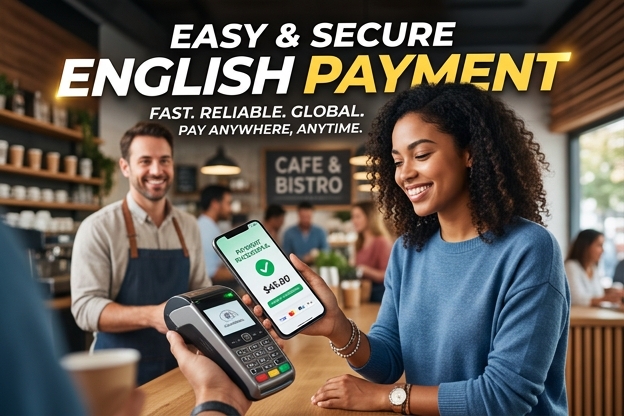
Real-World Experience From Online Casino Payment Gateway
I have seen this firsthand while working alongside teams at Online Casino Payment Gateway. In one operating cycle, we needed tighter control over small but frequent vendor payments tied to testing environments, software tools, and campaign-related spending. Traditional reimbursements were too slow, and broad-access company cards created unnecessary exposure.
We introduced a prepaid Visa card structure with separate virtual cards assigned by vendor and project. That changed behavior almost immediately. Instead of chasing receipts at month-end, the finance team could see spend in context as it happened. Cards for short-term use were loaded only with exact budget amounts, and any unusual transaction was visible before it turned into a reporting problem.
In another case, I worked on a rollout where team leads requested more flexibility for cross-functional purchases. At first, they wanted fewer restrictions. After a trial period, the opposite became clear. The teams preferred a system with merchant-category boundaries and pre-set limits because it removed ambiguity. They no longer had to ask whether a purchase would be approved after the fact. The rule was built into the card itself.
For Online Casino Payment Gateway, the lesson was simple: the best prepaid card program is the one that supports speed without sacrificing accountability. In industries where payment controls are part of operational resilience, that balance matters every day.
Future Trends in Business Prepaid Cards
The market is moving toward smarter, more programmable spend tools. Finance teams no longer want static prepaid cards with limited oversight. They want cards embedded into workflows, policies, and analytics.
Gartner noted in recent finance transformation research that organizations are investing more heavily in digitized spend management and decision support. That trend favors prepaid card platforms with automation, API connectivity, and richer controls.
Expect these trends to shape the next wave of business prepaid card adoption:
- More single-use and vendor-locked virtual cards
- Deeper ERP and expense software integrations
- AI-assisted anomaly detection for spending patterns
- Faster issuance for distributed and global teams
- More policy-driven funding and approval rules
For businesses with remote workforces, international contractors, or multiple entities, prepaid cards will increasingly function as programmable budget containers rather than simple stored-value tools.
Final Thoughts and Next Steps
Prepaid Visa Cards for Business:How to Choose the Best Option for Your Company comes down to one core principle: pick the program that gives your business control where it needs control, and flexibility where it needs speed. The best solution is not defined by branding alone. It is defined by spend rules, reporting depth, fee clarity, operational fit, and compliance readiness.
Online Casino Payment Gateway recommends these next steps:
- Audit your current employee and department spending flows to identify where prepaid cards would reduce reimbursement delays or card exposure.
- Shortlist providers based on controls, integrations, and total operating cost rather than promotional pricing.
- Run a limited pilot with one department or spend category before expanding company-wide.
References
- Association for Financial Professionals, 2024 Payments Fraud and Control Survey — Provided context on the continued prevalence of payment fraud and the value of stronger controls.
- Deloitte 2025 finance modernization outlook — Supported the emphasis on automation, real-time reporting, and integrated financial processes.
- ACFE 2024 Report to the Nations — Added perspective on common fraud schemes and why layered expense controls matter.
- Gartner finance transformation research, 2024-2025 — Informed the discussion about digitized spend management and programmable finance tools.
FAQ
What are prepaid Visa cards for business used for?
They are typically used for controlled employee spending, travel budgets, software subscriptions, digital advertising, contractor expenses, and project-based purchasing. The main advantage is that the business preloads only the funds it wants exposed.
How do prepaid business cards differ from corporate credit cards?
Corporate credit cards draw against an approved credit line, while prepaid cards spend only what has been loaded onto them in advance. That makes prepaid cards useful when a company wants tighter limits, lower fraud exposure, and simpler budget segmentation.
Prepaid Visa Cards for Business:How to Choose the Best Option for Your Company?
Start by mapping your main spending categories, then compare providers based on spend controls, virtual card options, reporting quality, accounting integrations, card management speed, and total fees. The best option is the one that matches your workflows and risk profile, not just the one with the lowest advertised cost.
Are virtual prepaid Visa cards better than physical cards for business?
For online purchases, vendor subscriptions, and digital campaigns, virtual cards are often better because they can be created quickly, restricted to specific uses, and replaced fast if compromised. Physical cards remain useful for travel, field operations, and in-person spending.
What fees should a company check before choosing a prepaid card provider?
Review activation fees, monthly platform charges, card issuance costs, reload fees, foreign transaction fees, ATM fees, replacement fees, and inactivity fees. Also account for the hidden cost of weak reporting or manual reconciliation.
Are prepaid business cards good for fraud prevention?
They can reduce exposure because each card only holds approved funds, but they are not a standalone fraud solution. Stronger protection comes from pairing prepaid cards with approval rules, merchant controls, transaction monitoring, and audit reviews.