
Introduction
Late payments choke cash flow, create unnecessary follow-up work, and turn routine billing into a constant source of friction. That is exactly why Online Invoice Payment Processing: Streamline Billing and Get Paid Faster has become a priority for finance teams, founders, agencies, SaaS companies, and high-volume digital merchants. When invoices are easy to send, easy to pay, and easy to reconcile, businesses reduce delays and spend less time chasing money.
Online Casino Payment Gateway has seen this shift firsthand while helping businesses modernize payment operations. The core issue is rarely invoicing alone. It is the gap between sending a bill and actually collecting funds. Payment links, automated reminders, multi-method checkout, fraud controls, and accounting sync all matter if a company wants faster settlement and fewer payment disputes.
Online invoice payment processing is the system that lets a business issue invoices digitally and accept payment through online methods such as cards, bank transfers, digital wallets, and ACH. It streamlines billing by combining invoice delivery, payment collection, reminders, tracking, and reconciliation into one workflow, which helps businesses get paid faster and with less manual effort.
For many companies, the difference between a clunky invoicing process and a modern one shows up in days sales outstanding, customer satisfaction, and internal workload. A slow process creates hidden costs: payment exceptions, mismatched records, customer confusion, and support tickets. A strong process does the opposite. It shortens the path from invoice to cash and gives leadership a more reliable view of revenue in motion.
Table of Contents
- Why payment speed matters more than ever
- How online invoice payment processing works
- Core features that actually reduce payment delays
- Which setup fits different business models
- How to implement a better billing workflow
- What we learned from real client workflows
- Risks, limits, and compliance realities
- What is changing in invoice payments through 2026
- Final takeaways and next steps
Why payment speed matters more than ever
Most businesses do not fail because they lack invoices. They struggle because payment collection is inconsistent. A sale recorded in the CRM does not help payroll, vendor obligations, or growth plans until money reaches the bank account. Faster collections improve liquidity, reduce borrowing pressure, and make forecasting more accurate.
According to PYMNTS Intelligence reporting published in 2024, businesses continue to rank late payments and manual back-office work among the most expensive operational bottlenecks in B2B payments. In parallel, a 2024 Gartner finance trends analysis noted that finance leaders are under growing pressure to automate receivables and improve real-time visibility across billing, collections, and cash application. The message is clear: payment speed is no longer a back-office convenience. It is a strategic performance lever.
Customers feel this too. If paying an invoice requires downloading a PDF, logging into online banking, typing reference numbers manually, and emailing a remittance advice, many will delay it until later. That “later” often becomes your collections problem.
“The fastest way to reduce overdue invoices is not a harsher collections email. It is removing every bit of friction between receipt and payment.”
That is why modern online invoice payment processing is built around convenience, trust, and automation. The less effort a customer spends paying you, the more likely you are to get paid on time.
How online invoice payment processing works
At a basic level, the workflow starts when a business creates an invoice inside an accounting platform, ERP, billing system, or payment dashboard. The invoice is then delivered by email, portal, or embedded link. The customer clicks through to a secure payment page, chooses a payment method, completes the transaction, and receives a receipt. The transaction status updates automatically, and the data syncs back to financial records.
What separates average systems from excellent ones is orchestration. A strong setup does more than accept money. It manages timing, reminders, reconciliation, tax handling, risk checks, and reporting across channels.
Key stages in the process
- Invoice creation with accurate line items, due dates, and tax details
- Digital delivery through email, customer portals, or payment links
- Secure checkout with cards, ACH, wire alternatives, or digital wallets
- Automated reminders before and after the due date
- Real-time payment confirmation and ledger updates
- Reconciliation against bank deposits and customer records
- Exception management for failed payments, partial payments, or disputes
If one of these steps breaks, delays appear fast. That is why businesses increasingly prefer integrated platforms instead of disconnected invoicing, payment, and bookkeeping tools.

Core features that actually reduce payment delays
Not every invoice tool improves collections. Some create cleaner PDFs but still force customers through a clumsy payment experience. If your goal is to streamline billing and get paid faster, focus on features that move behavior.
Payment method choice
Customers pay faster when they can use the method they already trust. For U.S. businesses, that usually means card payments, ACH, and wallet options. For larger invoices, bank rails often matter because fees are lower and transaction caps are less restrictive.
Automated reminders and dunning logic
Reminder timing has a direct effect on conversion. A reminder two days before the due date, another on the due date, and a final sequence after the due date typically outperforms ad hoc follow-ups from account managers. The reminder should include the invoice amount, due date, and a direct payment link.
Partial payments and installment support
Some industries, especially services, consulting, gaming-adjacent technology, and wholesale, benefit from progress billing. Allowing deposits, milestone invoices, or approved payment plans can increase actual collection rates without damaging customer relationships.
Accounting and ERP sync
A fast payment is still a problem if your team has to manually match it later. Native sync with QuickBooks, Xero, NetSuite, or custom ERP systems reduces posting errors and cuts close-cycle workload.
Fraud screening and authentication
Invoice fraud is not limited to consumer checkout. Business payments can be exposed to account takeover, fake invoice redirection, card testing, and social engineering. Good systems use tokenization, address verification, device checks, velocity rules, and role-based permissions.
“Finance teams should judge payment technology by two outcomes: how much faster cash arrives and how much manual work disappears after payment lands.”
Which setup fits different business models
The right configuration depends on invoice size, customer type, payment method preference, and internal complexity. A freelancer sending ten invoices a month does not need the same architecture as a SaaS provider handling international enterprise billing.
| Business type | Typical invoice pattern | Best payment setup | Main priority |
|---|---|---|---|
| Marketing agency | Monthly retainers and project milestones | Card plus ACH with automated reminders | Reduce overdue client invoices |
| B2B SaaS company | Subscription renewals and annual contracts | Stored payment methods and billing automation | Retention and recurring collection accuracy |
| Wholesale distributor | Large invoices with net terms | ACH, bank transfer rails, and portal access | Lower fees and easier remittance matching |
| Professional services firm | Time-based billing and expense pass-through | Detailed invoices with one-click online payment | Client clarity and faster approval to payment |
The table shows a practical truth: the best invoice payment system is not the one with the most features. It is the one aligned to how your customers prefer to pay and how your finance team needs to reconcile.
How to implement a better billing workflow
Rolling out online invoice payment processing works best when it is handled as an operational redesign, not just a software purchase. The technology matters, but field-level details matter just as much: invoice wording, due-date policy, approval flow, reminder cadence, and fee strategy.
Recommended implementation sequence
- Audit your current receivables process. Measure average payment time, dispute frequency, failed payment rate, and manual reconciliation hours.
- Segment customers by payment behavior. Separate enterprise accounts, SMB clients, recurring customers, and one-off projects because they often need different payment options.
- Choose payment methods intentionally. Offer cards for speed, ACH for lower cost, and wallets where they improve mobile completion.
- Standardize invoice design. Keep line items clear, due dates prominent, and payment buttons obvious.
- Automate reminders. Build pre-due and post-due sequences that sound professional rather than aggressive.
- Connect accounting systems. Make sure invoice status, fees, taxes, and receipts sync automatically.
- Set fraud and approval controls. Use user permissions, verification checks, and change logs for invoice edits and payout changes.
- Review performance monthly. Track DSO, payment completion rate, exception rate, and cost per collected invoice.
One common mistake is launching every feature at once. Businesses usually get better results by first fixing invoice clarity and payment accessibility, then adding deeper automation and analytics after the basics are stable.
What we learned from real client workflows
I worked with a digital services operator that had a familiar problem: invoices were sent on time, but payment often arrived 12 to 18 days late. The finance team was emailing PDF invoices manually, accepting bank transfers by instruction, and then reconciling deposits by hand. Clients were not refusing to pay. They were simply delaying because the process took too many steps.
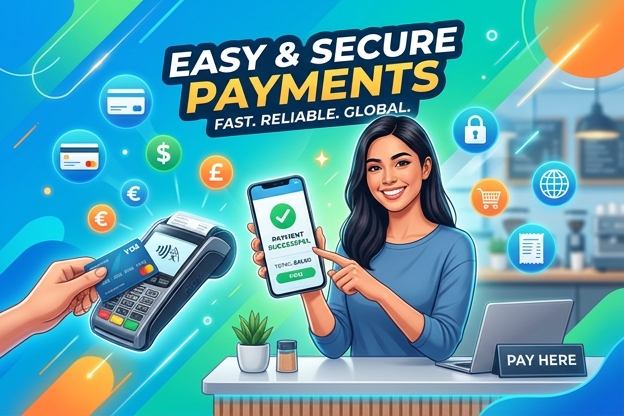
With support from Online Casino Payment Gateway, we redesigned the workflow around online invoice payment processing. We added branded payment pages, card and ACH options, automated reminders, and direct invoice links embedded in every message. Within one billing cycle, the team saw a meaningful shift. More customers paid on the same day they opened the invoice, and support emails asking “how do I pay this?” dropped sharply.
In another engagement, I saw a company overcorrect by pushing card payments for every invoice, including large B2B balances. Collection speed improved, but fee costs rose enough to concern leadership. We adjusted the setup by steering smaller invoices to card and larger invoices to ACH, while keeping the same online portal experience. That balance improved net collections without adding friction for customers.
These cases reinforced two lessons. First, payment speed improves when the user experience is simple. Second, optimization is not only about speed. It is about speed, cost, control, and reconciliation working together.
Risks, limits, and compliance realities
Online invoice payment processing is powerful, but it is not magic. Businesses still need governance. Faster billing can expose weak policies just as quickly as it solves manual pain.
Fee pressure
Card acceptance can accelerate cash flow, but it may increase processing costs, especially on high-ticket invoices. Businesses should model margin impact before defaulting to cards for all customers.
Disputes and chargebacks
Digital convenience can raise exposure to chargebacks if invoice descriptions are vague or if deliverables are not documented. Clear line items, signed agreements, delivery logs, and customer communications all matter.
Security and compliance
Payment data touches regulated territory. A provider should support secure data handling, tokenization, audit trails, and PCI-aligned controls where relevant. For cross-border payments, tax handling and local payment preferences also become important.
Integration debt
If your payment processor, invoicing platform, CRM, and accounting stack do not communicate well, you may simply move the problem downstream. Faster payments with messy records create finance headaches at month-end.
According to the AFP 2025 Payments Fraud and Control Survey, organizations continue to report payment fraud attempts across multiple channels, with business email compromise remaining a major concern. That matters for invoice processing because invoice redirection scams often begin with a compromised email workflow rather than a broken payment form. Strong controls should include payout change verification, dual approval for bank detail changes, and staff training.
What is changing in invoice payments through 2026
The market is moving toward embedded, data-rich, lower-friction receivables. Payments are becoming less of a separate event and more of a native part of billing operations.
Trends worth watching
- Smarter payment routing: systems will increasingly steer transactions toward the lowest-cost or highest-success method based on invoice size and customer history.
- Real-time payment expectations: as instant payment rails expand, customers will expect faster confirmation and more transparent settlement status.
- AI-assisted collections: finance teams will use predictive reminders, risk scoring, and anomaly detection to prioritize follow-up more effectively.
- Self-service B2B portals: customers want one place to view invoices, payment history, credits, and open balances.
- Tighter system integration: billing, payments, cash application, and forecasting will continue to merge into unified workflows.
Deloitte’s 2024 finance outlook also emphasized the growing role of automation and analytics in modern finance operations, especially where manual workflows delay visibility. That aligns perfectly with invoice payment modernization. The companies that gain the most are not only digitizing invoices; they are turning receivables into a measurable, optimized process.
For businesses operating in specialized or high-risk digital sectors, provider choice will become even more important. Reliability, risk controls, settlement transparency, and support quality are often as important as headline transaction rates.
Final takeaways and next steps
Online invoice payment processing works best when it removes friction for the customer and manual effort for your team at the same time. Faster collections come from a combination of clear invoices, convenient payment methods, smart reminders, reliable integrations, and strong controls. Businesses that treat billing as part of customer experience, not just accounting, usually see the biggest gains.
Online Casino Payment Gateway recommends three practical next steps:
- Audit your current invoice-to-cash timeline and identify exactly where delays happen: delivery, approval, payment choice, or reconciliation.
- Launch a simplified online payment flow with clear invoice formatting, direct payment links, and at least two preferred payment methods.
- Track results for 30 to 60 days using metrics like average payment time, completion rate, processing cost, and support volume.
If you do those three things well, billing becomes faster, more predictable, and easier to scale.
References
- Gartner finance trends analysis, 2024: highlighted growing pressure on finance leaders to automate receivables and improve visibility across billing and cash operations.
- PYMNTS Intelligence, 2024: reported continued business concern around late payments, manual processes, and friction in B2B payment workflows.
- AFP Payments Fraud and Control Survey, 2025: documented ongoing payment fraud risks, including business email compromise relevant to invoice and receivables controls.
- Deloitte finance outlook, 2024: emphasized automation, analytics, and operational modernization in finance functions.
FAQ
What is Online Invoice Payment Processing: Streamline Billing and Get Paid Faster?
-
It refers to using digital invoicing and online payment tools to send bills, accept payments, automate reminders, and reconcile transactions faster. The goal is simple: reduce payment friction so customers pay sooner and finance teams spend less time on manual follow-up.
Which payment methods should I offer on invoices?
-
Most businesses should start with a mix of:
Credit and debit cards for speed and convenience
ACH or bank transfer for lower-cost larger invoices
Digital wallets when mobile payment completion matters
Stored payment methods for repeat customers or recurring billing
How much can online invoice payments improve cash flow?
-
Results vary by industry and customer mix, but many businesses see shorter payment cycles once they add direct payment links, automated reminders, and easier payment options. The biggest gains usually come from reducing delays caused by manual bank instructions and disconnected invoicing systems.
Are card payments always the best option for invoices?
-
Not always. Cards are fast and familiar, but they may be expensive for large B2B invoices. Many businesses use a blended model:
Cards for smaller or urgent invoices
ACH for larger balances
Stored methods for repeat billing
Customer-specific options based on payment history
What security controls matter most in invoice payment processing?
-
Focus on controls that protect both payment data and workflow integrity:
Tokenization and secure payment pages
User permissions and audit logs
Verification for bank-detail changes
Fraud screening and transaction monitoring
Staff training against invoice redirection scams
How do I know if my invoicing workflow needs to be upgraded?
-
Your process likely needs work if you see these signs:
Customers regularly ask how to pay
Finance staff manually match payments line by line
Overdue invoices pile up despite steady sales
Reporting on open balances is slow or inaccurate
Payment methods are too limited for your customer base